Same Videos, Different Audience: When to Reposition Who You Are Talking To
There is a frustrating stage most channels hit somewhere in the first year. The edits are clean. Retention is respectable. The thumbnails look like the ones you admire. And the channel still is not going anywhere.
The instinct at that point is to blame the content and work harder on it. Better lighting, tighter cuts, longer scripts. Sometimes that is right.
Often it is not, because the problem was never the video. It was who the video was addressed to.
I have been making videos since 2017, mostly faceless channels aimed at viewers in the US, the UK, Germany and Japan, and repositioning – changing the audience without changing much of the material – has been one of the more useful moves available. It is also one of the easiest to do badly.
What repositioning actually means
It is not a rebrand and it is usually not a change of niche. You keep the material. What changes is the promise on the outside of it: the title, the phrases you target, the emotion in the thumbnail, and therefore the person who arrives.
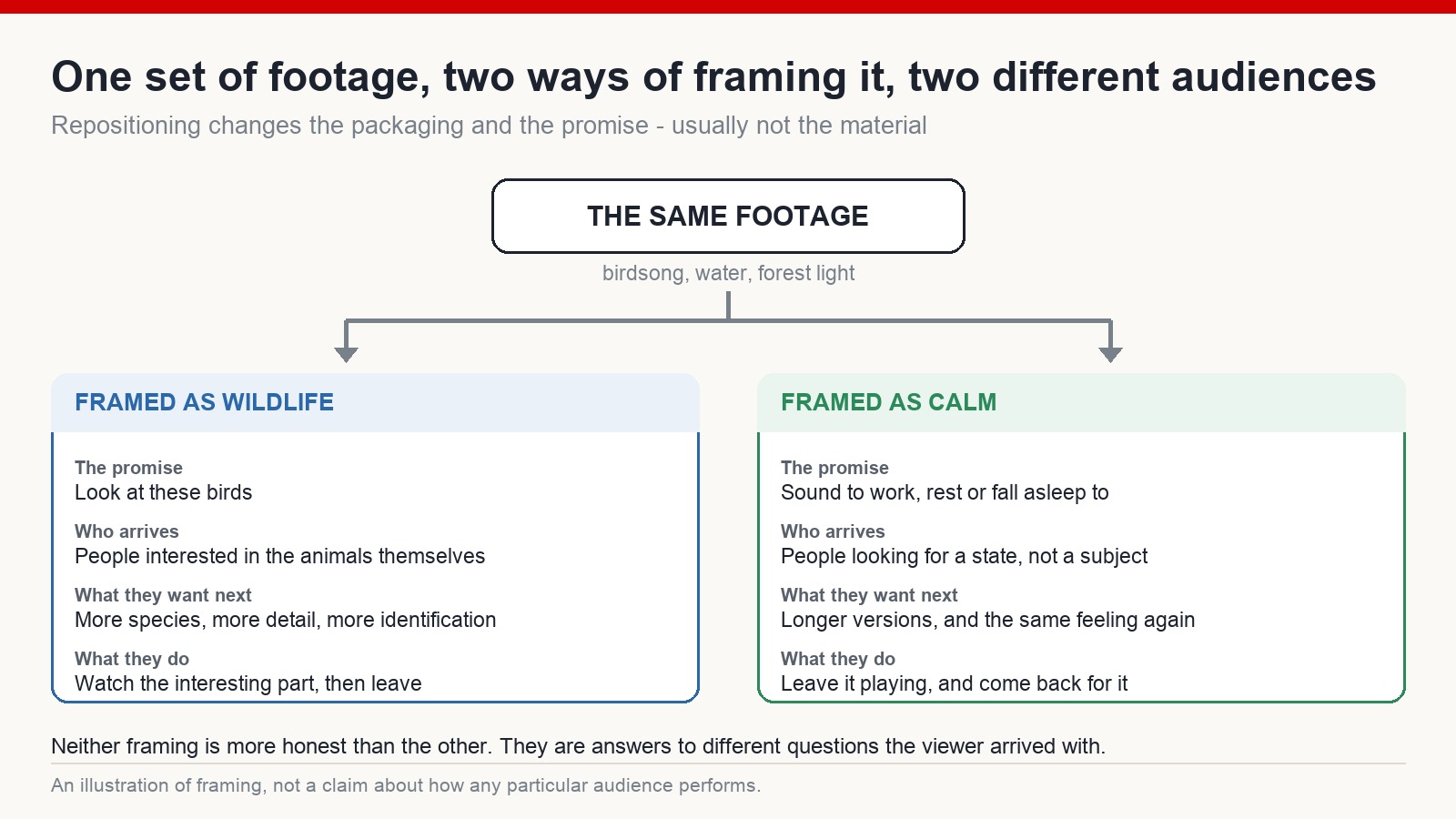
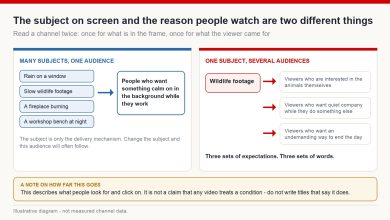
Take footage of birds, water and forest light. Frame it as wildlife and you attract people interested in the animals themselves. They want more species, more detail, more identification, and they watch the interesting part and leave.
Frame the same footage as sound to work or rest to and a different person arrives. They are not there for the subject at all, they are there for a state. They want longer versions and the same feeling again, and they leave it playing rather than watching it.
Same files. Different promise. Different behaviour, different retention, different reason to come back – and a completely different set of phrases you would put in the title.
Neither framing is more honest than the other. They are answers to two different questions the viewer arrived with.
Four signals that it is worth trying
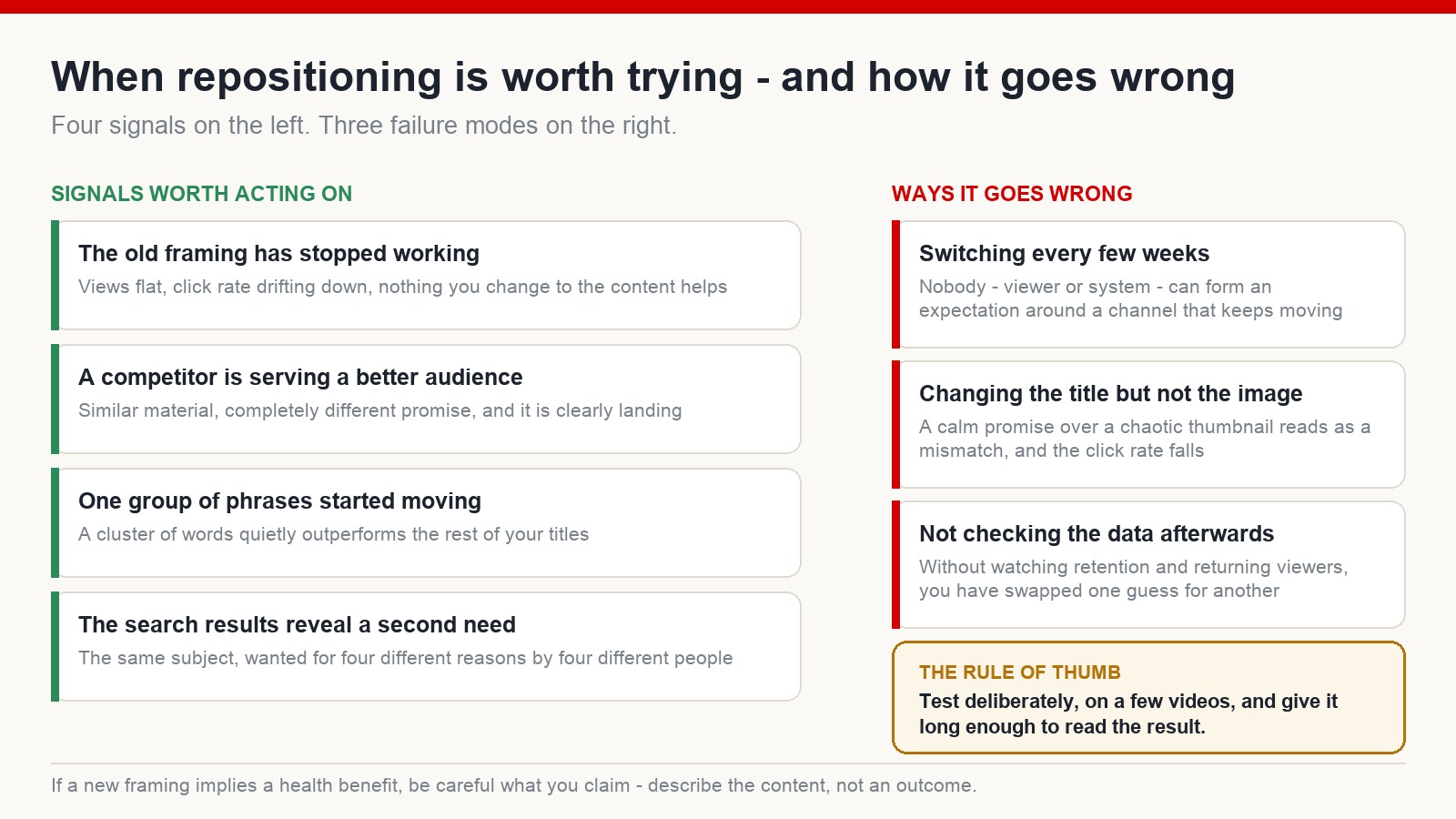
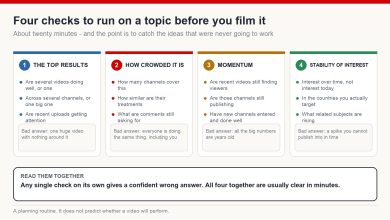
The old framing has stopped working
Views have flattened, click rate is drifting down, and nothing you change about the videos themselves seems to move it. Most people respond by abandoning the niche entirely. Before doing that, it is worth asking whether the material is fine and the address is wrong.
A competitor is serving a better audience with the same material
You find a channel with footage like yours, a format like yours, and a completely different promise on top of it – and it is clearly landing. That is the most direct signal there is, because it removes the guesswork about whether the reframing works in your subject.
One group of phrases has quietly started moving
You have been varying your titles, and a cluster of words is outperforming the rest. Not one video – a group of them, sharing a mood or a use case.
This is the signal people most often waste. They notice, feel pleased, and then go back to publishing the usual mix. If a particular framing is being rewarded, the useful response is to go further into it and see how deep it runs.
The search results reveal a second need
Look at what surrounds your subject in search suggestions and you often find the same material wanted for several unrelated reasons – to sleep to, to concentrate to, to have on in the background, to learn something specific from. Each of those is a different audience hiding inside one niche, and you can serve one of them deliberately instead of accidentally serving a bit of all of them.
Why this affects more than views
Two channels with the same view count can be worth very different amounts, because advertisers are not buying views – they are buying access to a particular group of people. Audiences differ in what advertisers will pay to reach them, and how much watch time they generate.
I would not push that argument too hard. Rates move constantly, they vary by country and season, and no one can hand you a reliable multiplier. But it is worth knowing that the audience you attract is one of the few things you decide before you write a script, and it has consequences beyond the view count.
One caution that matters more than the revenue point. If a new framing implies a benefit – better sleep, less anxiety, improved focus – stay on the right side of the line between describing your content and making a claim about outcomes. Describe what the video is. Do not promise what it will do to somebody. That is both the responsible position and, when the framing touches health, the safer one.
Three ways repositioning goes wrong
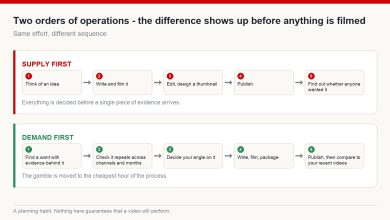
Switching every few weeks. Calm this month, motivation next month, something else after that. Neither a viewer nor a recommendation system can form an expectation around that, and you end up with less clarity than you started with. Repositioning is a deliberate test, not a habit.
Changing the title but not the image. A calm, quiet promise sitting above a loud, cluttered thumbnail reads as a mismatch, and people simply do not click. The two have to agree. If you reposition, reposition the whole package.
Not reading the result. If you do not watch what happens to click rate, retention and returning viewers afterwards, you have not run a test – you have swapped one guess for another.
How to test it without wrecking the channel
Keep the core content exactly as it is. Change the framing on a small number of videos – enough to see a pattern, not so many that the channel loses its shape.
Try different emotional registers deliberately: curiosity, calm, urgency, aspiration. Each pulls a different person. Then give it long enough to read properly, because a single video tells you nothing.
What you are looking for is not just a higher click rate. Click rate can rise while retention falls, which usually means the new framing is attracting people the video does not actually satisfy. The combination you want is more clicks and people staying longer and more of them coming back. That combination means you found an audience you can genuinely serve.
Hold your niche loosely
The thing that keeps people stuck is identity. “I’m a wildlife channel.” “My channel does this kind of video.” Those sentences feel like commitment, and mostly they are just habit.
The audience decides what your channel is, and audiences move. Attention shifts, formats age, new needs appear around the same subject. Noticing that and adjusting is not giving up on your niche – it is the ordinary work of paying attention to who is actually watching.
Which means that when a channel stalls, the first question is not always what is wrong with the videos. Sometimes it is: am I still talking to the right person?
Is repositioning the same as changing niche?
No. In most cases the content stays largely the same and only the framing changes – the title, the target phrases, the thumbnail’s emotion. Changing niche means changing what you make. Repositioning means changing who you make it for.
How do I know the new audience is better?
Watch click rate, retention and returning viewers together rather than any one of them. A framing that raises clicks while retention falls has attracted the wrong people. The signal you want is more clicks, longer viewing and more people coming back.
How often should I reposition?
Rarely, and on purpose. Frequent switching destroys the consistency both viewers and the recommendation system rely on. Test one direction, give it enough videos and enough time to produce a readable result, then commit or move on.
Which audiences are worth the most?
There is no fixed ranking, and any list you read is a snapshot of somebody’s channel in a particular market and year. Advertiser value differs by subject and season, so treat it as one input among several rather than the reason to pick a direction – and be especially careful with subjects touching money, health or major life decisions, where the duty of care outweighs the rate.
If you want to see how audience choice, packaging and format fit together for an English-speaking audience, that is what I teach at mmoyoutube.com.